
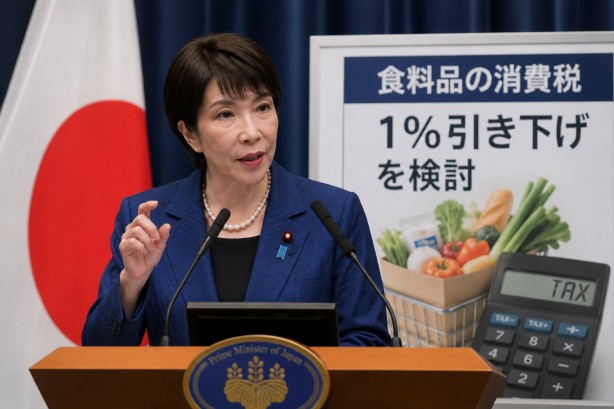
In a significant policy shift, Japanese Prime Minister Sanae Takaichi is poised to direct the ruling Liberal Democratic Party to advance a proposal aimed at reducing the consumption tax on food items. The plan, which is set to take effect in April 2027, seeks to lower the tax from the current 8% to 1% for a duration of two years. This move comes after prolonged discussions on tax reform reached an impasse, prompting the government and its coalition partners to endorse the temporary tax cut as a viable solution.
The proposed tax reduction is part of a broader strategy to alleviate the financial strain on households, especially those with low to middle incomes. Accompanying the tax cut is a substantial financial package, estimated at approximately ¥600 billion, intended to provide direct cash assistance to these households. This dual approach aims to mitigate the rising cost-of-living pressures that have become a focal point of economic policy debates in the country.
Efforts to finalize this landmark policy are underway, with the government targeting an early August completion. The focus now shifts to legislative action, as the necessary legal framework is expected to be introduced during an extraordinary session of the Japanese parliament later this year. This legislative push is crucial to ensure the timely implementation of the tax cut by the planned date in April next year.
As the government navigates the complexities of tax reform, this initiative represents a critical step in its broader economic strategy. By addressing the immediate concerns of household budgets while fostering economic stability, the administration seeks to strike a balance between fiscal responsibility and social welfare. The outcome of this policy could have far-reaching implications for Japan’s economic landscape, setting a precedent for future tax reform measures.