
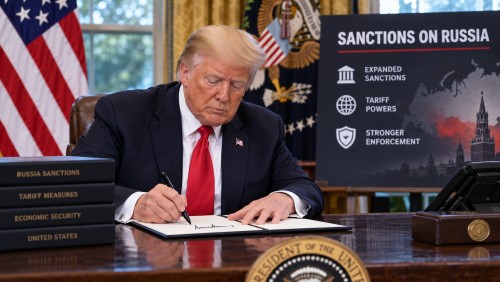
The recent expansion of U.S. sanctions against Russia, signed into law by President Donald Trump, could significantly impact major energy-importing countries, such as India and China, depending on the administration’s enforcement strategy. The legislation empowers the president to impose tariffs as high as 100% on nations that continue to purchase Russian energy, a move that could disrupt global energy markets and trading relationships.
This development comes as part of a broader legislative package designed to intensify economic pressure on Russia, targeting officials, financial networks, and other entities tied to Moscow’s military activities. By restricting Russia’s ability to profit from oil and gas exports, the U.S. aims to curtail financial resources that may support Russia’s war efforts.
The newly signed law, which passed the House of Representatives with bipartisan approval, extends existing sanctions on Iran as well. The White House described the measure as a strengthening of the United States’ tools for imposing sanctions and tariffs, particularly against Russia, aligning with broader foreign policy objectives.
President Trump now holds extensive authority to determine which countries will be subject to these tariffs, and he can decide whether certain sanctions can be waived. This flexibility allows for a tailored approach to international relations and economic pressure, although details on implementation remain to be seen.
As the global community watches closely, the potential implications for countries heavily reliant on Russian energy are substantial. Diplomatic negotiations and strategic adjustments may be necessary for those nations seeking to navigate the challenges posed by the expanded U.S. sanctions regime.